


WebstaurantStore
4.787.00 Reviews
App Specs
- Version
- 1.8.11
- Updated On
- License
- Free
- Downloads
- 100,000+
- Developer
- WebstaurantStore.com
- Categories
- Shopping
- Platform
- Android
Screenshots
 Analysis by AppCompare
I approached WebstaurantStore as a shopping app for people who buy restaurant supplies regularly, not as a general marketplace for occasional household purchases. That distinction matters. The app comes from WebstaurantStore.com, and its purpose is closely tied to commercial food-service shopping: the kind of ordering where product suitability, repeatability, and dependable account handling matter more than browsing for entertainment.
It is free to install, carries an Everyone age rating, and has built a strong response among its users, with a 4.8 average from around 900 ratings. That does not automatically make every order effortless, but it is a useful sign that the app is serving a real audience rather than simply acting as a thin mobile storefront. I found the experience most convincing when I treated it as a practical purchasing tool for a café, food truck, catering operation, school kitchen, or serious home cook who needs supplies beyond normal supermarket shelves.
The app has passed 100,000 installs, which gives it a reasonable mobile footprint without making it feel like a universal shopping platform. Its current version is 1.8.11, and it runs on Android 7.1 or later. Those requirements make it accessible on many older devices, although anyone using an aging phone should still expect a less comfortable browsing experience than on a newer screen.
What makes the shopping experience feel trustworthy
Trust is especially important in restaurant supply shopping because a wrong item is not always a minor inconvenience. A container with the wrong capacity, a utensil in an unsuitable material, or equipment that does not fit a workspace can create waste and delay. My first impression of this app is that it is more useful when I already know the type of item I need and can compare product details carefully, rather than when I am casually looking for inspiration.
The developer name is visible as WebstaurantStore.com, which gives the app a clear connection to the shopping service it represents. That clarity is preferable to an app that hides its commercial identity behind a vague brand. I also appreciate that the app is positioned around a specific supply category instead of pretending to be everything for everyone. A focused catalog can make a purchasing decision easier because I am thinking in terms of kitchen operations, serving, storage, cleaning, and related work rather than sorting through unrelated consumer goods.
Still, a recognizable developer does not remove the need for care. I would not place a large order solely because the mobile interface feels polished or because the app has a high average rating. I would review the item information, check quantities, confirm the selected variation, and look over the final order before submitting it. That habit is particularly important when a product appears in several sizes or when a listing is intended for professional use but could also look suitable for a home kitchen.
The app’s strongest trust signal, in my view, is not a flashy feature. It is the way a focused supplier app can support a deliberate buying routine. I can open it with a specific task in mind, search for the required supply, inspect the result, and keep the purchase process separate from the distractions found in broad marketplaces. That narrower purpose is useful for managers who want staff to shop from a known source instead of improvising across unrelated stores.
Worth Reading Before You Choose

EA SPORTS FC Mobile 26 Is a Bigger Football Game, but It Takes Time

Flipboard Shows What News Apps Must Do Beyond the Feed

Switching to Android Auto Means Rethinking Your Driving Routine

Google Calendar Makes a Crowded Week Easier to Manage

Ludo King Makes the Most of the Minutes Between Plans

Baby Panda World Brings Quick Play to Modern Phones, but Its Game Library Feels Busy
Account decisions deserve attention before the first order
One question many users will have is whether an account is necessary. In practice, shopping apps commonly make account access part of the order process, and this is the point where I would slow down and read each screen rather than accepting every prompt automatically. I would use an account only when it provides a clear benefit, such as keeping order information together or making repeat purchasing more convenient.
I would also keep login details unique to this service and avoid creating an account on a shared device unless the device has a reliable screen lock. That is not a criticism aimed specifically at this app; it is simply sensible behavior for any shopping service that can hold personal order information. If another person uses the phone, I would sign out when appropriate and avoid leaving an active checkout session open.
For a business, the account question becomes more practical. A manager may want purchasing to be organized, while a temporary worker may only need to find an item. I would decide in advance who is allowed to place orders and who is only allowed to browse. If the app is being used by several people, a simple internal rule about account access can prevent accidental purchases more effectively than relying on memory at the moment of checkout.
Where personal information matters most
The most sensitive moments are not usually the early browsing screens. They are account creation, checkout, delivery details, payment, and any point where an order history becomes connected to a person or business. I pay closer attention there because a shopping app may need information to complete an order, but I still want to understand what I am agreeing to and which choices are optional.
My advice is to read permission requests in context. If the app asks for access that is not clearly connected to shopping, I would pause and look for an explanation before allowing it. I would not grant access simply because the app asks. On Android, I would also revisit the device’s permission controls after installation so I can see what access remains enabled and remove anything I do not want to keep active.
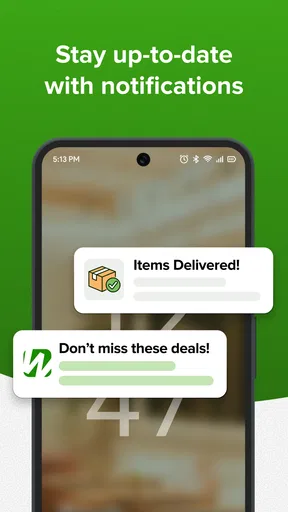
That approach gives me a useful boundary: the app can be convenient without receiving unlimited access to the phone. I would be especially cautious on a device used for both work and personal life, where unnecessary access could expose more information than intended. The same principle applies to notifications. Order updates can be useful, but promotional alerts may not be worth the interruption. I prefer to enable only the notifications that help me manage a purchase.
Another data-sensitive moment is the final review before payment. I would check the delivery address, contact details, selected products, and quantities while there is still time to correct them. This is a small step, but it is one of the most valuable habits in any shopping app. It protects against both financial mistakes and the practical problem of sending supplies to the wrong kitchen.
Useful workflows for real restaurant purchasing
The app makes the most sense in a repeatable workflow. Imagine I am helping a small café prepare for a busy weekend. Instead of waiting until supplies run low, I could use the app during a stock check, search for replacement items, compare the available choices, and build the order while the inventory list is in front of me. The benefit is not merely speed. It is the chance to connect each purchase to a real shortage and avoid buying based on a vague memory.
A second useful workflow is separating research from approval. A staff member can identify candidate products, while the person responsible for spending reviews the basket and confirms the final purchase. Even if the app itself does not replace a business approval system, using it in this two-step way reduces the chance that someone orders the wrong size or an unnecessary duplicate.
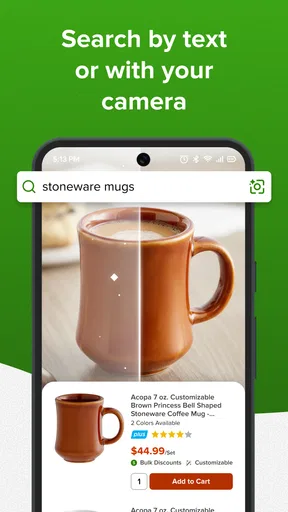
I also recommend writing down the exact product requirement before searching. For example, “replacement storage containers for prepared ingredients” is still too broad. I would note the needed capacity, material preference, approximate footprint, and number of units. That makes the app’s search results easier to judge and prevents the common mistake of choosing the first item that looks close enough.
A less obvious advantage of a dedicated supplier app is that it can become part of a standard purchasing routine. If a kitchen repeatedly buys the same kinds of disposables, serving pieces, or storage supplies, the app is more valuable than a general marketplace because the user is returning with a professional purpose. The trade-off is that this focus may feel excessive for someone who only wants one casual household item.
Where the app can slow me down
The main friction is not that the app lacks a reason to exist; it is that restaurant supply shopping often involves details that cannot be rushed. A mobile screen is convenient, but it is still smaller than a desktop display. When I need to compare several variations, inspect specifications, or think about how an item will fit into a working space, I may prefer a larger screen before placing the final order.
That is an important distinction between browsing and buying. I like the phone for checking an item while walking through a kitchen or noticing a shortage during a stock count. For a substantial order, I would take more time and avoid making decisions while distracted. If the catalog presents many similar choices, the convenience of mobile access can tempt me to move too quickly.
Another limitation is that this is not the right tool for every kind of shopper. Someone decorating a home kitchen may find a broad retail marketplace easier for comparing brands, reading lifestyle-oriented reviews, or combining restaurant supplies with unrelated household purchases. Someone who needs immediate local pickup may also prefer a nearby store’s app, depending on the urgency of the item. The dedicated supplier approach is strongest when the user values a focused source and can plan the purchase.
I would also avoid judging the app only by the speed of opening or the appearance of its screens. The real test is whether I can identify the correct product, understand the purchase, and complete the order without losing control of the details. If a screen feels crowded or a result is ambiguous, I would treat that as a reason to verify more carefully, not as an invitation to guess.
How it compares with ordinary shopping alternatives
Compared with a general marketplace, this app has a clearer professional identity. A general marketplace may offer more unrelated products and a larger variety of sellers, but that breadth can make restaurant purchasing feel scattered. WebstaurantStore.com’s dedicated approach is better suited to someone who wants to think in terms of food-service supplies and return to the same type of catalog for future needs.
Compared with a local restaurant-supply store, the app offers the convenience of researching from wherever I am. That helps when I am preparing a purchase list outside business hours or checking options before making a trip. The local store still has an advantage when I need to physically inspect an item, ask an immediate question in person, or obtain something urgently.
Compared with a desktop browser, the mobile app is more practical for on-the-go stock checks and quick product research. The browser or a larger device may be better for long comparison sessions, especially when I am coordinating a larger basket. I see the app and the website-style shopping experience as complementary rather than mutually exclusive: the phone helps me capture the need, while a larger screen can make careful review easier.
The right choice therefore depends on the job. I would recommend this app to a restaurant operator, caterer, food-service employee, or serious cook who buys specialized supplies and wants a focused mobile route. I would be less enthusiastic for a person who rarely buys this type of product, dislikes creating shopping accounts, or needs an immediate local purchase more than a planned supplier order.
Practical habits that improve control
I would begin by checking the app’s permissions immediately after installation. Android 7.1 compatibility is helpful for older phones, but older devices are also more likely to be shared, outdated, or used without recent security maintenance. A screen lock, current system updates where available, and careful account handling matter more than the app’s low installation requirement.
Next, I would keep a separate inventory note rather than relying entirely on memory or a shopping basket. The note can include the item’s intended use, required quantity, and the reason for replacing it. This makes it easier to recognize whether a similar-looking product is actually suitable. It also prevents a common professional mistake: ordering based on a product name while forgetting the physical constraints of the kitchen.
Before submitting an order, I would perform a three-part check. First, confirm the product variation. Second, confirm the quantity and destination. Third, confirm the account and payment details shown at checkout. This takes little time, but it is especially valuable when several people contribute to one order or when the phone has been used for multiple shopping sessions.
I would manage notifications as a user choice, not as a default obligation. Delivery-related alerts may help me plan receiving and storage, while general promotional notifications may be unnecessary. If I stop using the app, I would remove it from the device and review any saved account access rather than leaving an unused shopping session in place.
One final tip is to avoid making a large purchase from a weak connection or while rushing between tasks. A slow-loading screen can make it harder to notice a changed selection or an incomplete checkout step. I prefer to place important orders when I can read everything calmly. The app is designed to make shopping mobile, but mobile convenience should not turn a considered supply decision into a hurried tap-through.
My cautious verdict
After looking at it as both a shopping tool and a point of account access, I see WebstaurantStore as a focused option rather than a universal recommendation. Its free availability, Everyone rating, broad Android compatibility, and strong user response make it approachable. More importantly, its connection to WebstaurantStore.com gives it a clear purpose for restaurant and food-service purchasing.
The best reason to use it is control over a focused buying workflow, not simply the promise of convenience. I can see real value in using it to prepare supply lists, research replacements, and support repeat purchasing. The app is particularly well matched to users who already know what their operation needs and are willing to verify product details before ordering.
My reservations are equally practical. A phone is not always the best place for a complex comparison, and a dedicated supplier app may be unnecessary for occasional shoppers or people who need local availability immediately. I would also make permissions, notifications, account access, and checkout review part of my routine instead of assuming that any shopping app should receive broad trust automatically.
Overall, I would recommend it to a friend who runs a small food business or regularly buys professional kitchen supplies. I would tell that friend to use the app as an organized purchasing aid, keep personal choices visible at every account and permission step, and take extra care with variations and quantities. Used that way, it feels more purposeful than a generic marketplace and more convenient than starting every supply search from scratch.
Pros
- Wide selection of restaurant equipment
- supplies
- and foodservice products.
- Detailed product specifications make it easier to compare professional-grade items.
- Bulk purchasing options can help businesses reduce per-unit costs.
- Regular deals and clearance offers provide opportunities for additional savings.
- Useful for both commercial kitchens and serious home cooking projects.
Cons
- Many products are sold in large quantities
- which may not suit casual buyers.
- Shipping costs can be high for oversized or heavy restaurant equipment.
- The extensive catalog may feel overwhelming when searching for specific items.
- Some items have limited availability depending on location and stock levels.
- Returns can be less convenient for large
- bulky
- or business-use purchases.
FAQs for WebstaurantStore
What is WebstaurantStore, and what can I buy through the app?
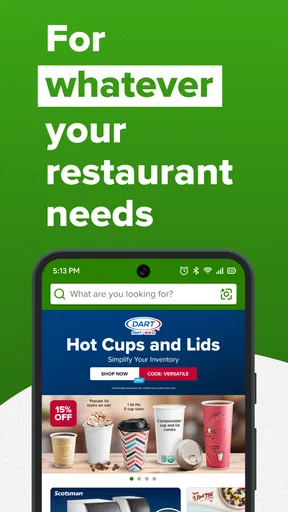
WebstaurantStore is an online shopping platform focused on restaurant, foodservice, hospitality, and business supplies. While reviewing the app, I found categories covering commercial kitchen equipment, cookware, smallwares, furniture, disposables, cleaning products, food ingredients, and more. It is designed primarily for professional buyers, but individuals can also use it when looking for bulk supplies or specialized products that may be difficult to find in ordinary retail stores.
Does WebstaurantStore deliver products to my location?
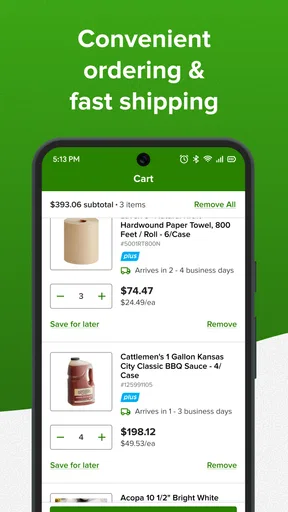
Delivery availability depends on the product, seller or warehouse, and the address entered during checkout. The app allows you to review shipping information before completing an order, but costs and estimated arrival dates can vary considerably, especially for oversized equipment, refrigerated items, or large quantities. Before downloading or purchasing, check whether WebstaurantStore serves your region and carefully review the shipping charges, delivery restrictions, and expected arrival window.
Are WebstaurantStore prices lower than those of regular stores?
WebstaurantStore often offers competitive prices, particularly on bulk products, restaurant disposables, commercial equipment, and frequently purchased supplies. However, the lowest displayed price does not always represent the final cost because shipping, handling, minimum quantities, and optional accessories may affect the total. During my review, comparing the complete checkout price with local suppliers and other online retailers was important before deciding whether an item was genuinely the best value.
Can I track orders and manage my account in the WebstaurantStore app?
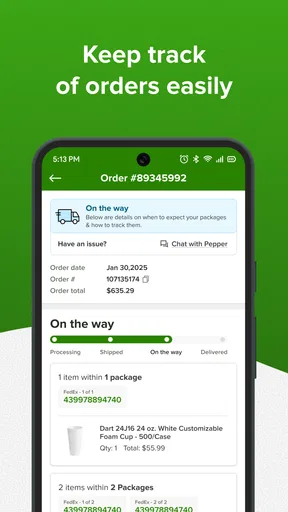
Yes, the app is intended to make account and order management more convenient. After signing in, customers can browse products, save items, place orders, review account details, and check order progress when tracking information is available. The exact tracking experience can depend on the carrier and shipping method. Users who purchase regularly may also benefit from keeping frequently ordered supplies in their account for easier reordering.
What should I know about returns, damaged items, and customer support?
Before ordering through WebstaurantStore, review the current return and cancellation policies because they may differ according to the product type, condition, shipping method, and whether the item is custom, oversized, or food-related. Commercial equipment can also require special inspection when delivered. If a package arrives damaged or incomplete, document the issue promptly and contact customer support using the instructions provided with the order so the claim can be handled as quickly as possible.


